
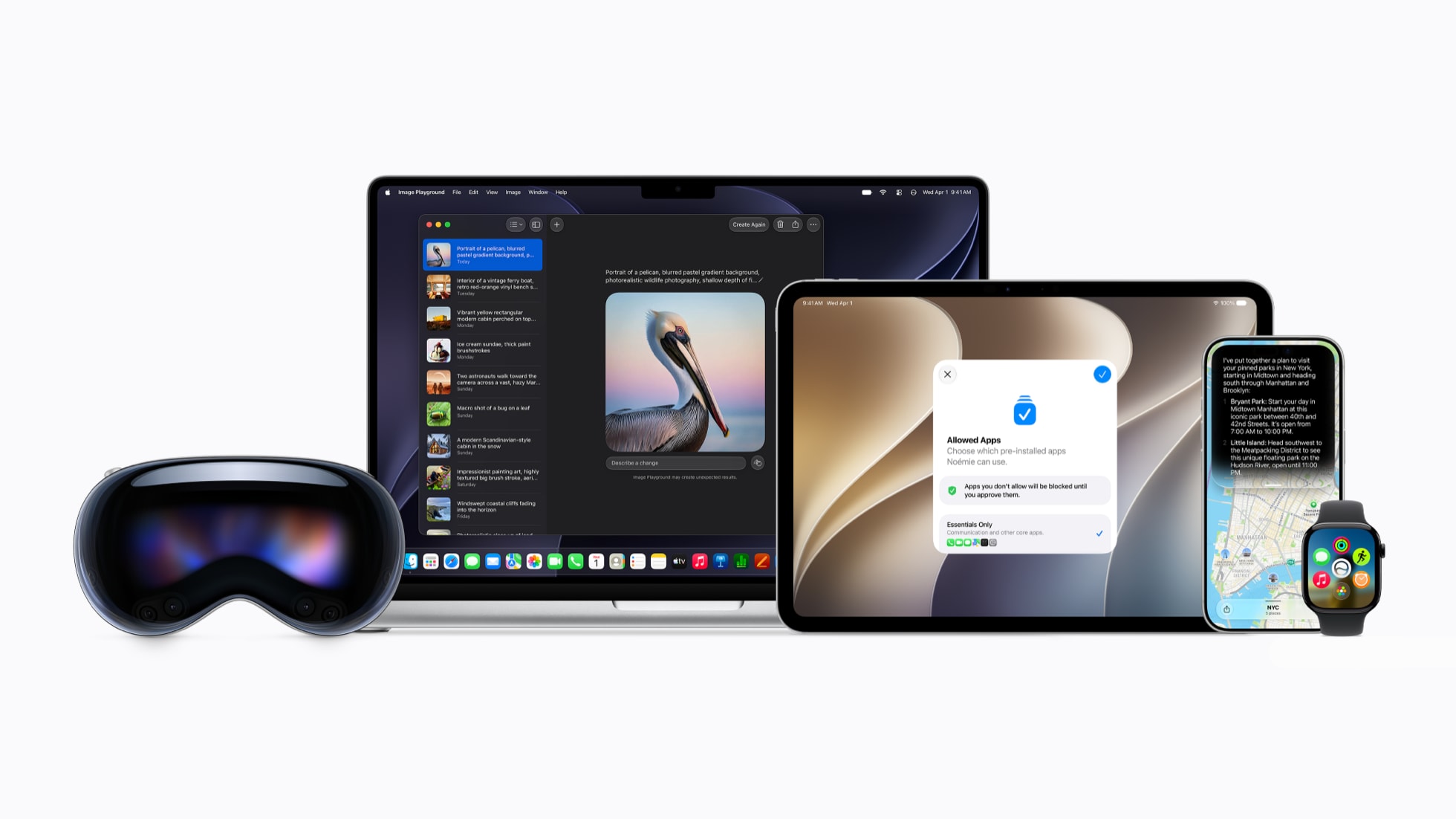
Apple is positioning privacy as a core design requirement for the next generation of Apple Intelligence. In its WWDC26 press release, the company introduced a new generation of Apple Intelligence, a substantially expanded Siri AI, and software features designed to operate across iPhone, iPad, Mac, Apple Watch, and Apple Vision Pro.
The announcement matters beyond the feature list. Apple Intelligence is moving closer to the parts of a device where sensitive information lives: messages, emails, photos, browser content, conversations, and app actions. That makes the boundary between useful assistance and excessive access one of the most important security questions around the platform.
A privacy-first architecture with a broader responsibility
Apple says the next generation of Apple Intelligence uses an architecture “uniquely designed to protect users’ privacy.” The company did not present that statement as a separate security certification or independent audit in the release. It is instead a design commitment attached to a much wider set of AI capabilities.
Siri AI will be able to understand the content displayed on a user’s screen, use personal context from across apps, and carry out actions between applications. It can also use broad world knowledge and access the web to generate current answers. Each capability increases usefulness, but each also creates a larger context-management problem: the system must determine what information is relevant, what should remain private, and which action a user actually intended.
That is particularly important when an assistant can move from reading information to changing something. A system that searches messages or photos is handling sensitive data; a system that can then create reminders, draft responses, or perform app actions must also apply strong authorization and confirmation rules. Apple’s announcement describes the capabilities, but it does not provide a complete technical threat model for every new workflow.
Personal context becomes a security boundary
The new Siri AI is designed to work with personal context across messages, email, photos, and other applications. Apple also says a dedicated Siri app will let users revisit conversations and privately synchronize conversational history through iCloud across their products.
For users, that promises continuity. For security teams and privacy-conscious customers, it highlights the need to understand where context is processed, how permissions are inherited, and what happens when a request crosses application boundaries. The announcement does not say that every task is processed in the same way or that every feature is available in every region. Apple explicitly notes that some capabilities may vary by language, location, device, and local regulation.
This distinction is important because “private” is not the same as “risk-free.” Privacy protections can limit who can access data, while security controls must also address malicious prompts, compromised accounts, unsafe links, accidental disclosure, and unauthorized actions. Apple’s public release establishes the direction of the architecture, but the practical safeguards will need to be assessed as developer builds and later software releases become available.
Safety controls extend beyond the assistant
Apple’s announcement also includes a set of controls aimed at helping parents manage children’s digital experiences. Child accounts can be configured with age-appropriate protections, restrictions on available apps, and approval requirements for new websites or contacts. Communication Safety, which already addresses nudity in certain contexts, is being expanded to intervene when shared images or videos contain gore or violent content.
These features are not cybersecurity tools in the narrow enterprise sense, but they are part of the same trust boundary. A safer AI platform needs controls that address not only model output, but also who can access information, what actions are permitted, and how potentially harmful material is handled. Apple’s approach places those controls in the operating system rather than treating them as a separate application layer.
Availability remains conditional
Apple says the new features are available for testing through its developer program, with a public beta planned for the following month and broader software availability expected in the fall. The release emphasizes that features may change and that some capabilities will not be available in every language or region. Siri AI will also arrive in stages, with additional platform and language support planned over time.
The supported-device list is also specific. Apple Intelligence and Siri AI require compatible recent hardware, and some features depend on an Apple Intelligence-enabled device nearby. That means the security and privacy experience will not be uniform across the entire Apple ecosystem. Organizations considering deployment will need to evaluate device eligibility, management controls, regional availability, and the behavior of each feature rather than treating the announcement as a single product launch.
What Apple has established—and what it has not
Apple has established a clear direction: more capable AI will be integrated into personal computing, and privacy is being presented as a foundational requirement rather than an optional setting. The company has also described new parental and communication-safety controls that broaden the platform’s protective layer.
What the announcement does not establish is a complete security assurance case for the new architecture. It does not provide a full independent assessment of every Siri AI workflow, a detailed account of failure modes, or a guarantee that the system will prevent every form of prompt manipulation or data leakage. Those questions will require further technical documentation, testing, and real-world observation as the software moves through beta releases.
For now, Apple’s announcement is best understood as a significant architectural and product direction. The success of the strategy will depend on whether the privacy promises remain understandable and verifiable as Siri gains more context, more integrations, and more authority to act on a user’s behalf.