
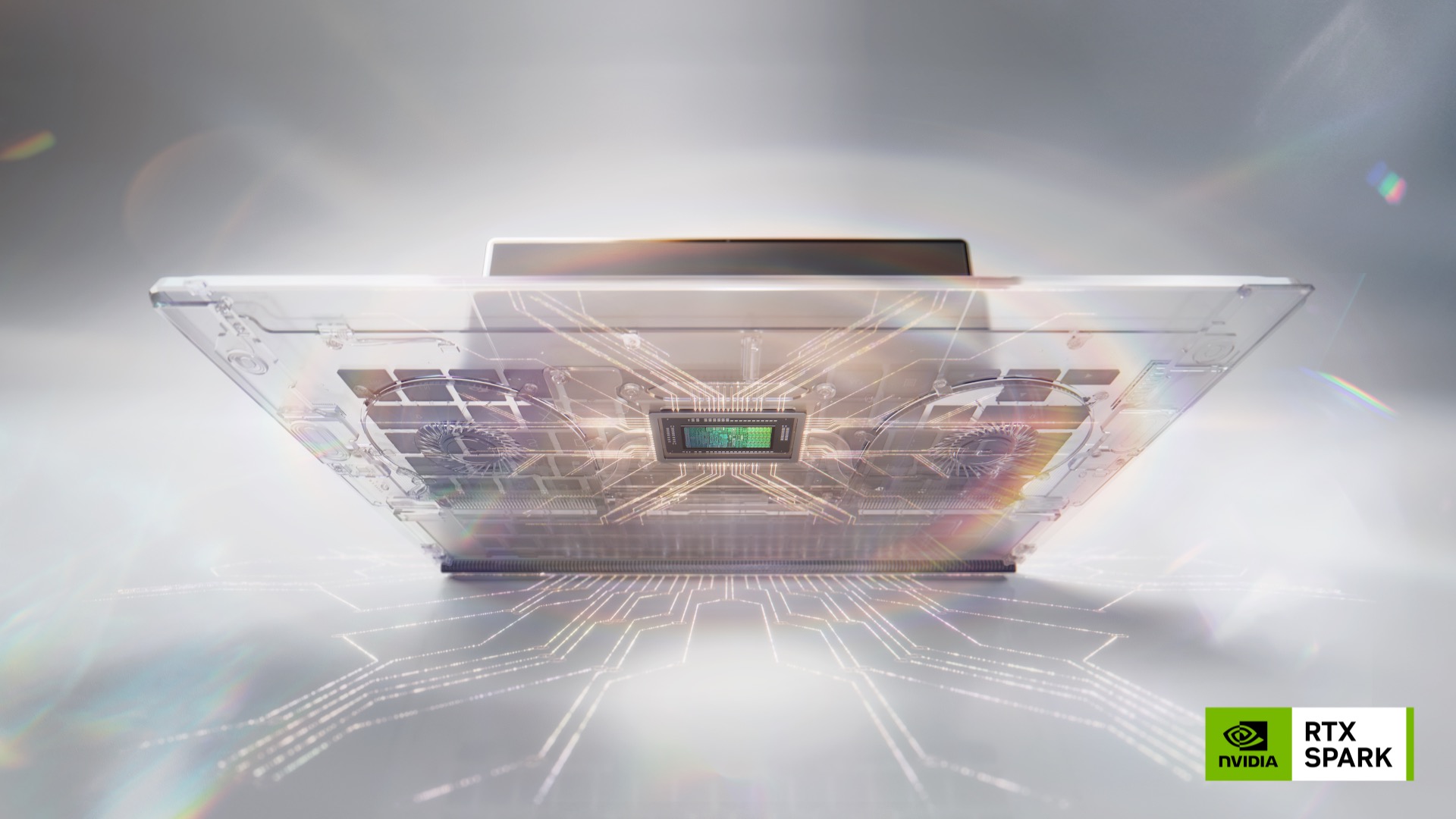
NVIDIA is broadening the gaming proposition for RTX Spark ahead of the platform’s planned autumn launch. At Gamescom in Cologne, the company announced that Electronic Arts, Embark and Ubisoft are bringing games to the Windows platform. Their commitments add to support previously announced by KRAFTON, NetEase, Riot Games and Xbox at COMPUTEX in May.
RTX Spark is being presented as more than a graphics platform. NVIDIA describes it as a new generation of Windows PCs built around personal AI agents, advanced content creation and high-performance gaming. That combination makes game compatibility a practical concern for players considering the devices, particularly those who already rely on multiplayer titles.
NVIDIA says it is working with developers and ecosystem partners to make PC games run on RTX Spark hardware. The announcement names participating companies and several technologies, but it does not provide a complete compatibility list or a precise launch date. It also leaves the final device range and pricing unspecified.
Several multiplayer games are part of the push
The named games include EA SPORTS F1 25, Apex Legends, Anno 117: Pax Romana, ARC Raiders and THE FINALS. The list covers competitive multiplayer as well as other PC releases, which means the platform’s gaming readiness depends on more than graphics performance. Security software and anti-cheat systems can determine whether a title works on new hardware at all.
That is the significance of NVIDIA’s work with Electronic Arts. The two companies are bringing native support for EA Javelin Anticheat to RTX Spark, including for EA multiplayer games such as EA SPORTS F1 25. For affected players, this is a specific compatibility commitment: the anti-cheat layer is being addressed as part of the platform’s launch effort instead of remaining an undefined future requirement.
RTX graphics features arrive alongside a longer AI plan
RTX Spark devices combine Windows with NVIDIA technologies such as DLSS and Reflex. NVIDIA also says DLSS 4.5 Ray Reconstruction is available with a second-generation Transformer model designed to improve image quality in content that uses ray tracing or path tracing.
The company separately announced path tracing for CONTROL Resonant and 007 First Light. These graphics announcements strengthen the platform’s gaming pitch, but they do not answer the broader question of how many existing PC games will be supported when the hardware launches.
NVIDIA’s AI roadmap follows a different timetable. Its ACE technologies are expected to arrive in Aniimo in early 2027, with the stated goal of allowing players to interact naturally with their creatures. That places the AI interaction feature on a later schedule than the games and graphics technologies highlighted in the initial RTX Spark push.
The launch still hinges on breadth of compatibility
RTX Spark is taking shape around local Windows hardware, AI capabilities and established PC gaming technologies. The newly announced publisher and developer commitments broaden that ecosystem, while native anti-cheat support removes one practical obstacle for multiplayer games.
For now, players have several named games and one concrete security integration to track. The remaining uncertainty is the scope of support at launch: NVIDIA has not yet provided the full supported-game catalogue, final device range, pricing or a precise release date. RTX Spark therefore has a clearer gaming proposition, but its usefulness will depend on how much of the wider PC library the developer and partner work can cover before the autumn rollout.