
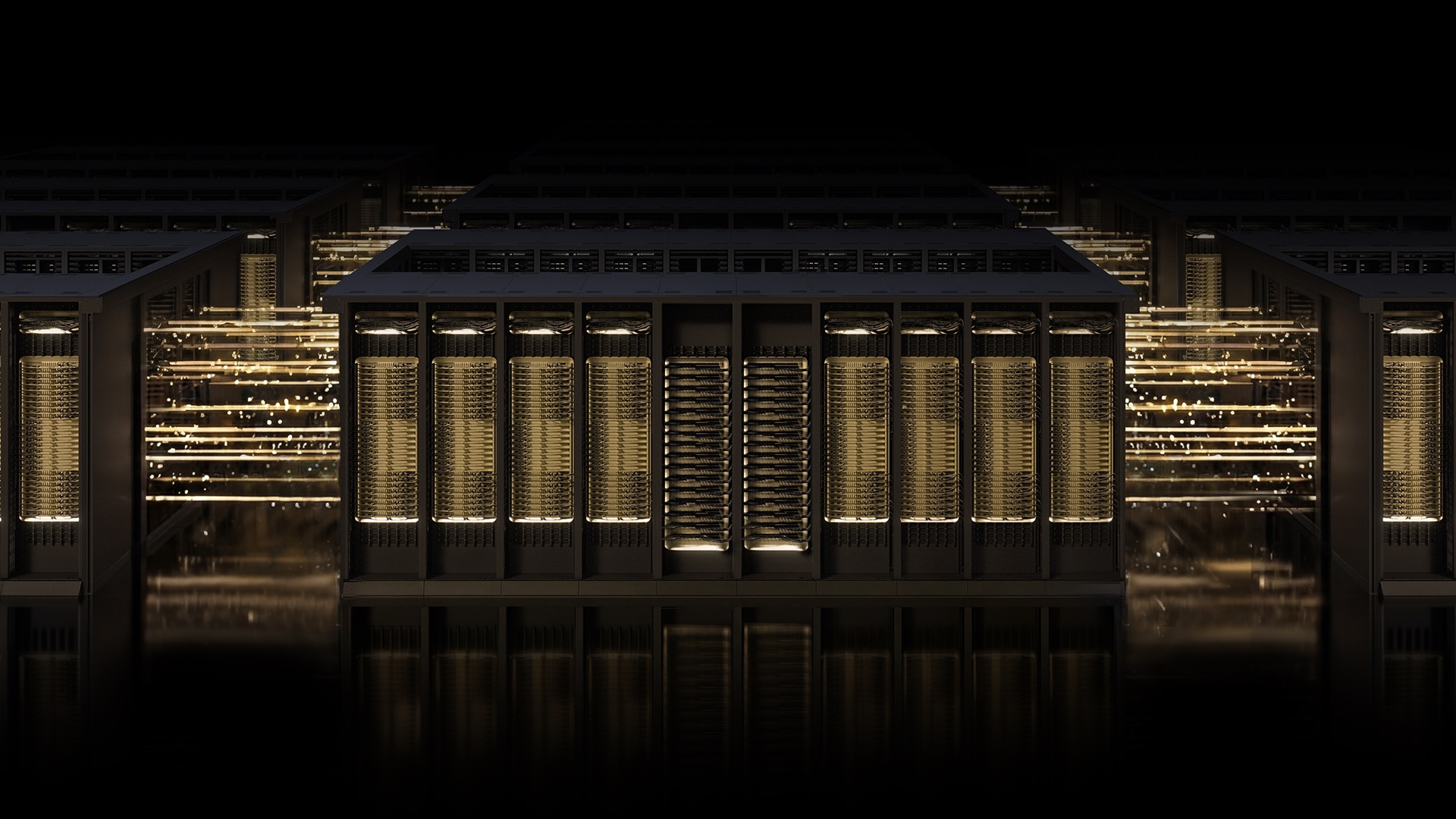
NVIDIA says its Spectrum-6 Ethernet switch system is arriving in gigascale AI factories worldwide, with a stated switching capacity of 102.4 terabits per second. The system is tied to the company’s Vera Rubin platform, putting the announcement firmly in the data-center and cloud infrastructure market rather than consumer networking.
For operators building very large AI clusters, the practical issue is how quickly connected systems can exchange data and recover when part of the network fails. Spectrum-6 is NVIDIA’s answer at the switching layer, although the company presents it as part of a wider platform rather than as a standalone upgrade.
Spectrum-6 is being positioned around Vera Rubin
In an official post dated July 21, 2026, NVIDIA describes Spectrum-6 as offering twice the capacity of its previous-generation systems. CoreWeave, Microsoft, Nebius, Oracle Cloud Infrastructure, SpaceXAI and Tesla are cited among the first AI infrastructure companies integrating the technology.
CoreWeave, Microsoft, Nebius and Oracle Cloud Infrastructure are also named as early providers deploying Vera Rubin-based infrastructure with Spectrum-6. The distinction matters: the switch is being presented for organizations adopting NVIDIA’s architecture, where networking, accelerated systems and the surrounding infrastructure are designed to work as one deployment.
Optical and cooling choices target different data-center designs
The Spectrum-6 chip and NVIDIA ConnectX-9 SuperNIC form the next generation of Spectrum-X Ethernet. NVIDIA says Spectrum-6 supports both pluggable and co-packaged optical formats, giving infrastructure teams more than one way to connect the system within a high-density data-center design.
Spectrum-6 offerings also support liquid cooling. That does not change the system’s core purpose—connecting large numbers of accelerated systems—but it gives operators another physical option as they plan the layout and cooling approach for AI infrastructure.
The reported gains cover throughput, efficiency and recovery
NVIDIA describes Spectrum-X as a platform that balances traffic across available paths, routes around failures quickly and recovers data that does not reach its destination. It also supports open network operating systems and a choice of RDMA transport models. Together, those features are intended to keep traffic moving through complex AI networks while leaving operators more flexibility in software and transport choices.
The company says Spectrum-X can deliver up to 1.6 times the AI networking performance of commercial Ethernet and maintain up to 95% network efficiency in deployments exceeding 100,000 GPUs. NVIDIA also says its hardware-accelerated multiplane topologies reduce the number of switches required in data centers by 1.7 times.
For the optical layer, NVIDIA attributes further gains to Spectrum-X Ethernet Photonics, reporting five times greater energy efficiency and a tenfold improvement in mean time between incidents. These are vendor-reported figures from the announcement, not independently reproduced test results in this report. Their real-world value will therefore depend on how the full platform is deployed.
Spectrum-6 changes the networking offer NVIDIA is presenting for Vera Rubin-scale deployments: more switching capacity, pluggable and co-packaged optical options, liquid-cooling support and recovery features aimed at very large AI factories. Its relevance is strongest for infrastructure providers and operators building within that ecosystem. For them, the decision will involve the claimed performance and efficiency gains as well as the commitment to NVIDIA’s broader platform.