
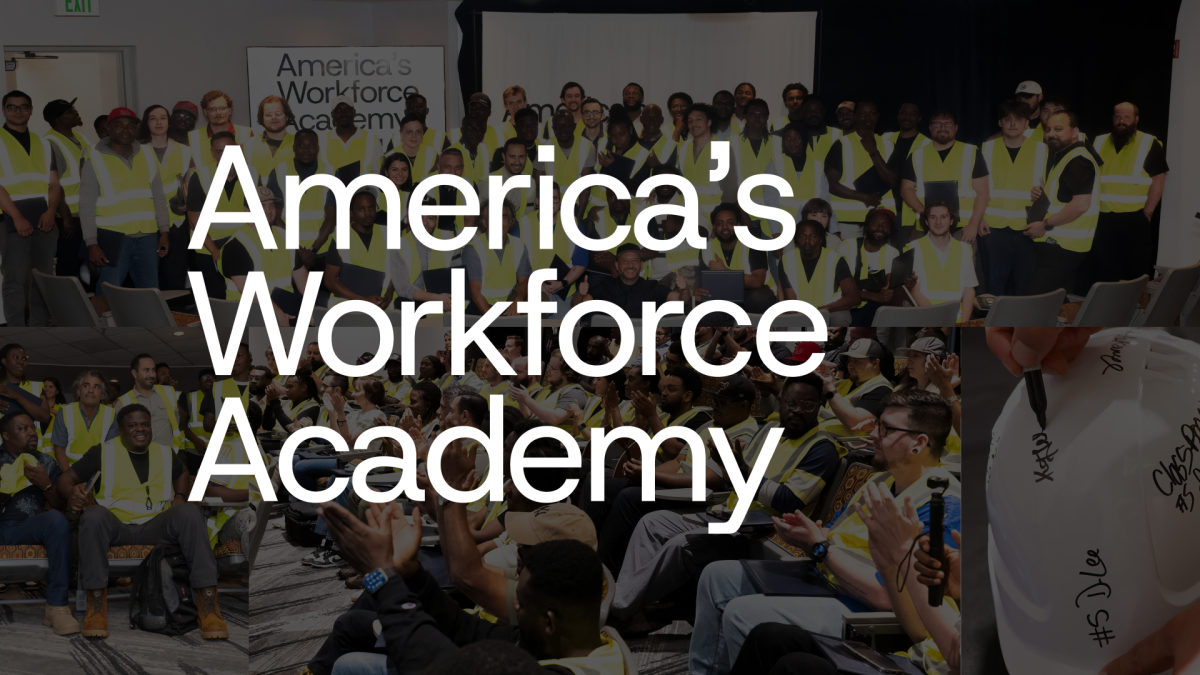
Meta’s America’s Workforce Academy (AWA) is a four-week training route into skilled trades connected to technology infrastructure. The first cohort graduated in the week before Meta’s announcement on August 18, 2026, and Meta says graduates are expected to move into construction work at Meta sites through a Meta partner.
What the program provides
AWA covers two announced training tracks: fiber-optic technology and general construction. Meta describes the program as free and says it covers participants’ travel and accommodation costs. For people considering an in-person course, those provisions reduce two immediate barriers to attendance, although applicants should still check whether the current intake involves any personal expenses not covered by the program.
Graduates receive an NCCER professional credential from the National Center for Construction Education and Research, as well as an America’s Workforce Academy certificate. These credentials document completion of the stated training. They do not, by themselves, represent a broader qualification in AI engineering, software development or cybersecurity. The program is aimed at the physical and construction work that supports technology infrastructure.
Choose the track that matches the work
The first decision is practical. Fiber-optic technology and general construction are different entry points, so AWA makes the most sense for someone interested in infrastructure work rather than a conventional software or security career.
That distinction matters because the program’s connection to artificial intelligence is indirect. Meta’s announcements place AWA alongside construction activity supporting its technology infrastructure; they do not describe it as an AI-development course. Applicants should therefore judge the opportunity by the kind of hands-on work it leads toward, not by the presence of AI in the wider infrastructure project.
The four-week format offers a focused route into the field. It should be assessed as an initial training step, with the longer-term value depending on the role available after graduation, the employer involved and the progression attached to that role.
Separate the training from the employment offer
Meta says graduates will move into construction work at Meta sites through a Meta partner, and describes a job awaiting graduates after training. That is an important part of the opportunity, but the announcement alone does not establish that every participant receives identical employment terms.
Before committing time, leaving existing work or considering relocation, confirm the employer, role, work location, start date and employment conditions for the specific cohort. Those details determine whether the route is suitable in practice. They also show whether the main benefit is the training itself, the credential, the employment connection or the combination of all three.
Meta describes the first-year investment as $115 million and calls it the largest private-sector U.S. commitment to skilled trades tied to a job guarantee. That is Meta’s characterization of the investment, not an independent comparison of every private-sector program. It should not be read as proof that every future intake has the same scope or placement terms.
Where the NABTU partnership fits
On August 12, 2026, Meta and the North America’s Building Trades Unions (NABTU) announced a partnership to support skilled-trades workers. Under that arrangement, AWA is intended to work with NABTU’s registered apprenticeship programs to build career paths into skilled trades.
NABTU is an alliance of 14 national and international building and construction unions. According to Meta’s partnership announcement, it represents more than 3.2 million skilled professionals in the United States and Canada. Its unions and signatory contractor partners invest more than $3 billion each year in over 1,900 training and apprenticeship centers across North America.
This gives AWA a wider context than a standalone short course: Meta is positioning it alongside existing apprenticeship infrastructure. The available announcements do not establish that every AWA graduate enters a union apprenticeship, however, or that every participant receives the same route into employment. Applicants should verify how the partnership applies to their particular track and cohort.
Use the current cohort details, not the headline
- Start with the type of work. Select AWA only if fiber-optic technology or general construction matches the work you want to pursue. The program is not presented as a general AI, software or cybersecurity certification.
- Check the current intake. Meta says graduations will take place weekly after the initial cohort. That suggests an ongoing cadence, but it does not guarantee that every location, track or employment opportunity will be available at every point.
- Confirm the actual costs. Verify that travel and accommodation are covered for the intake you are considering, and identify any remaining personal costs before committing.
- Read the employment terms separately. Confirm the partner employer, position, location, start date and conditions rather than treating the announced pathway as a universal placement guarantee.
- Record the credentials correctly. Check how the NCCER professional credential and AWA certificate are issued and how each relates to the role being offered.
The order matters. First establish that the work itself fits your goal; then check the cohort’s cost and schedule; only after that should you evaluate the employment terms and credentials. This prevents a free course or a prominent infrastructure partner from outweighing a role, location or schedule that does not suit you.
AWA’s trade-off is straightforward: four weeks and covered travel and accommodation can lower the cost of entering infrastructure work, but they do not remove the need to assess the job that follows. The available information supports a targeted bridge from hands-on training to construction connected to Meta’s technology infrastructure, not a universal route into AI careers.
For a prospective worker, the sensible next step is to verify the current cohort and its employment arrangement, then choose the track that matches the work intended. The opportunity is strongest when understood as a skilled-trades pathway with a stated connection to Meta infrastructure and NABTU apprenticeship structures, subject to the details of the specific intake.